
a-Tom-ic Jones
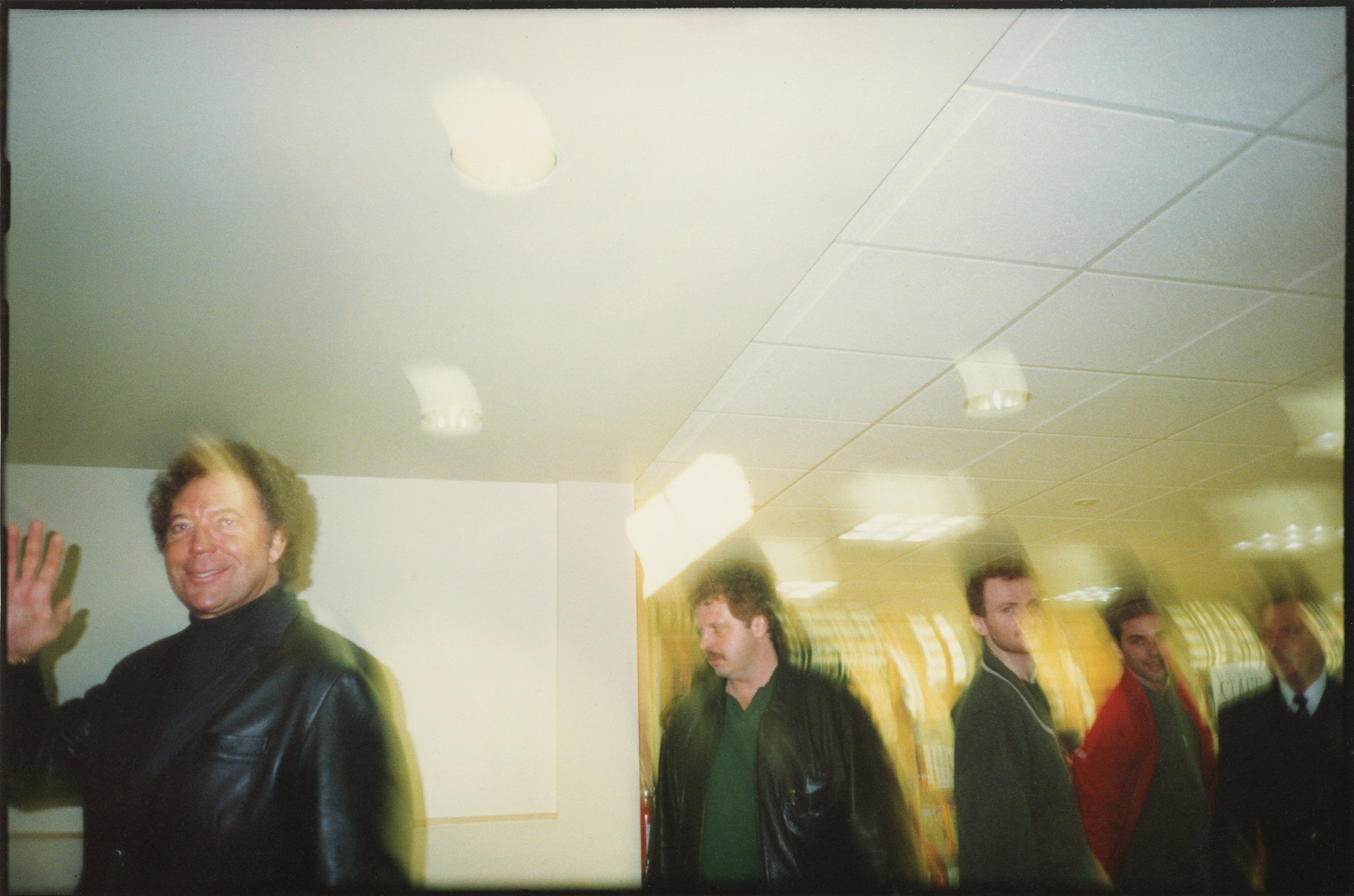
A few minutes into my interview with Tom Jones, there was a prolonged silence. I had just asked him about the song, “Looking Out My Window,” and he was speechless.
“I wrote that one,” he said, with excitement in his voice. We then talked about his passion for American R&B and how that inspired everything he did as a vocalist. I knew that I was in.
I came to Tom Jones in a roundabout way. My college friend Alan Farmer had an 8x10 glossy of Jones in his dorm room, and it started a conversation about his unorthodox interest in the “Housewife Rock” musician. Farmer and a few of his friends were passionate about this Welsh vocalist; their interest was certainly ironic, but it wasn’t clear if it was entirely so. They knew his catalog well, and listened to it regularly. I soon took up the mantle myself.
Coincidentally, Tom Jones had something of a comeback a couple of years later, launched by covering Prince‘s “Kiss.” I was on staff at the Canadian magazine Graffiti at the time, and that led to a telephone interview.
Most press obligations by musicians are surface level and done by rote, so I knew that signaling a deeper knowledge of his backstory could be helpful. When I brought up this 1968 single, the only one that he penned himself, I hoped that it would open some doors.
We started by talking about his latest releases, but he was also happy to talk about the era when he charted regularly and was a central cultural figure. Tom Jones had 19 songs land in the US top 40, including the monster hits “It’s Not Unusual,” “What’s New Pussycat?” and the James Bond theme, “Thunderball.” His ABC TV show “This is Tom Jones” ran from 1969 to 1971.
What were your intentions when you first started out?
I wanted to be a Rock ‘n’ Roll singer, but my own kind of Rock ‘n’ Roll. Doing “It's Not Unusual” was on the borderline as far as I was concerned, but I heard the commercial part of it, and I wanted a hit record badly. Now, when the second one was “What's New Pussycat?” I thought, “Oh, shit, I hope people aren't seeing me in the wrong way here.” I wanted them to hear the balls that had gone into “It's Not Unusual,” not only the fact that it's sort of an orchestra/band tune. So with “What's New Pussycat?” I said, “There is no way I could do this, I mean, this is not a bloody Rock ‘n’ Roll tune! I mean, what is this!?”
You eventually had a respectable roster of Rock artist guests on your television show, was this something you set out to do?
ABC would have preferred the whole thing to be like an Andy Williams show, but once it was a hit, and I carried some weight, I was asking for Little Richard, Jerry Lee Lewis… They said, “We don't know about these people, you know they're nuts!” [Laughs.] The network was pushing people from their other shows, so we struck a balance - like when Barbara Eden (from I Dream of Jeannie) and Wilson Pickett were on the same show.”
A friend told me that he thinks of Rick Astley as the new Tom Jones.
I was at an ABC function in Los Angeles earlier this year and Vince Edwards, the actor who played Ben Casey, was at my table. He said, ‘When I heard Rick Astley the first time I thought to myself, “This must be Tom Jones’ son.” I think it's that he has a heavy sound to his voice.
Has your vocal approach changed through the years?
I've always approached songs in basically the same way. If it's a Rock song, I hit it as hard as I can, and the same thing with ballads. I never sing lightly- it's always with some aggression; that's the way I feel so I put it into the songs.
I've read that Elvis Presley was influenced by your vocal style.
Elvis wasn't being influenced phrasing-wise. I think he got more aggressive too. If you listen to his early records, like “That's Alright Mama,” his voice was much lighter; he didn't attack things so much.
Presley’s “Kentucky Rain” sounds like Elvis doing Tom Jones.
You’re right, he admitted that, and he loved the fact of that. He told me enthusiastically, “I open my voice to ‘Delilah’. It's rubbing off on me.”
Your uniqueness as an artist seems to have stemmed from an ability to bring sexuality and Rock ‘n’ Roll to an older audience at a time when they were afraid of what youth culture was presenting them with.
I tried to define it at the time: you can sing Rock ‘n’ Roll in a tuxedo, but you can't sing ‘Fly Me to the Moon’ in Denims.
Adults will accept you if you can sing - if you have a full-bodied voice. It's hard for people that dress a certain way and have certain values to relate to long-haired kids in denims. It was hard for someone thirty years old, for instance, to relate to Mick Jagger - there was nothing macho about him, the trend had been changing, and older people couldn't quite grasp it.
It's funny actually, I did a show with the Rolling Stones in a club on Oxford Street in 1964. They had just cracked it, and I was beginning to make some noise around London. So, I'm on stage: white t-shirt, white shoes, and white pants- tight! And these teenage girls are looking at me a little strangely. They were a little frightened with me. Then Mick Jagger came on doing basically the same thing, and they were loving it.
For them it was the older sexual look that they couldn't quite deal with, I was muscular and looked like, um… a bloody truck driver. [Laughs.] I was only 24 years old, but to them it was it was like an adult being there.
You make no effort to cancel your passion for sex or your interest in sexuality in general; is this something that gets you in trouble?
To me, sexuality is the biggest thing in life, it affects us all, and we should be aware of it. If I'm talking to a woman, I'm aware that this creature I’m conversing with is a female. If I say that a lot of people get uptight, blush; can't seem to be able to deal with it.
You have to open up, to be honest and not scared. I’ll give you an example. Shirley MacLaine and I flew over from LA to Paris for a TV special together and got drunk. I asked her, “Shirley, what is all of this bullocks with the Women's Lib and all that? A woman is a woman and a man is a man; why do we have to bring in all of this Feminist stuff when it comes to romance?” And she answered, “I have to do it.” “But why do you have to do it?” She told me, “A woman just wants to be treated like a woman,” but if she isn't getting that attention, she may react the other way, antagonistically, saying that men are chauvinistic bastards and women must be equal to men.
And she added half-jokingly, “All a woman really wants is to be tied down to a bed and fucked!”
She said that?
She didn't say for me to do it to her, but she implied it.
But you see that when she opened up, when it wasn't glossed over, she wanted for me to know that she is a woman, while telling the rest of the world she is a hard-nosed women's lib person.
Was there a point when you were young when you noticed that you were more interested, or at least more openly interested, in girls than other boys were?
With some little boys, you genuinely see that they don't start liking girls for a long time, but I was in love with them very early- I would say at five years old. I remember that my bloody heart would ache if I tried to get close to a girl and got snubbed. It really bothered me. Some boys would be like, “Get these girls away,” but I was never like that. I thought they were wonderful. [Laughs.]
As a wrap-up, what's ahead for Tom Jones?
This is the first time, doing “Kiss,” that I've actually been encouraged by my record company to go full bull in that direction. All I plan to do now is records that I want to do, and that's it! I'm 48 years old now. It's a bit late, but, thank God, not too late.
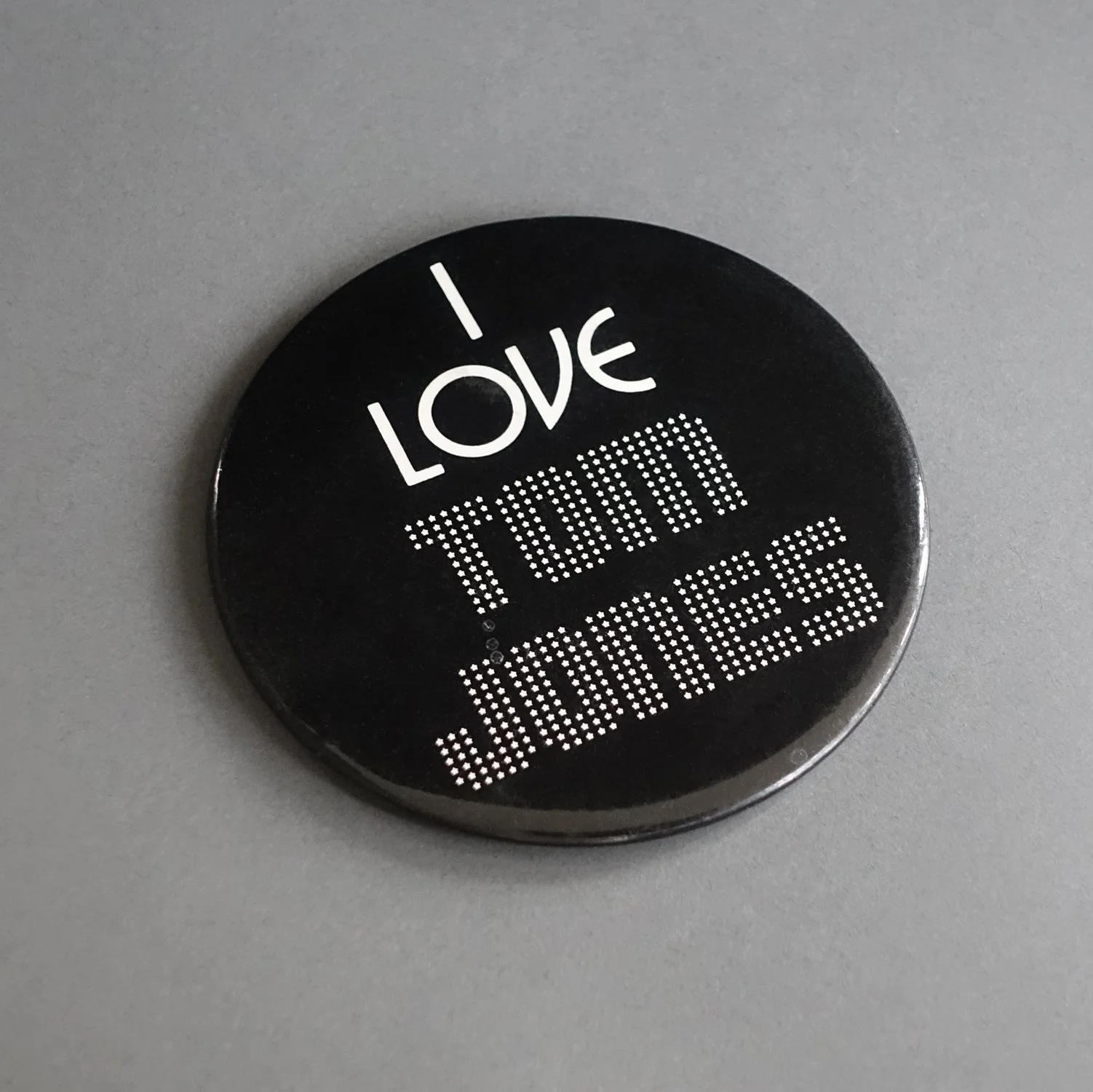
Top Image: Vintage “I Love Tom Jones” button.
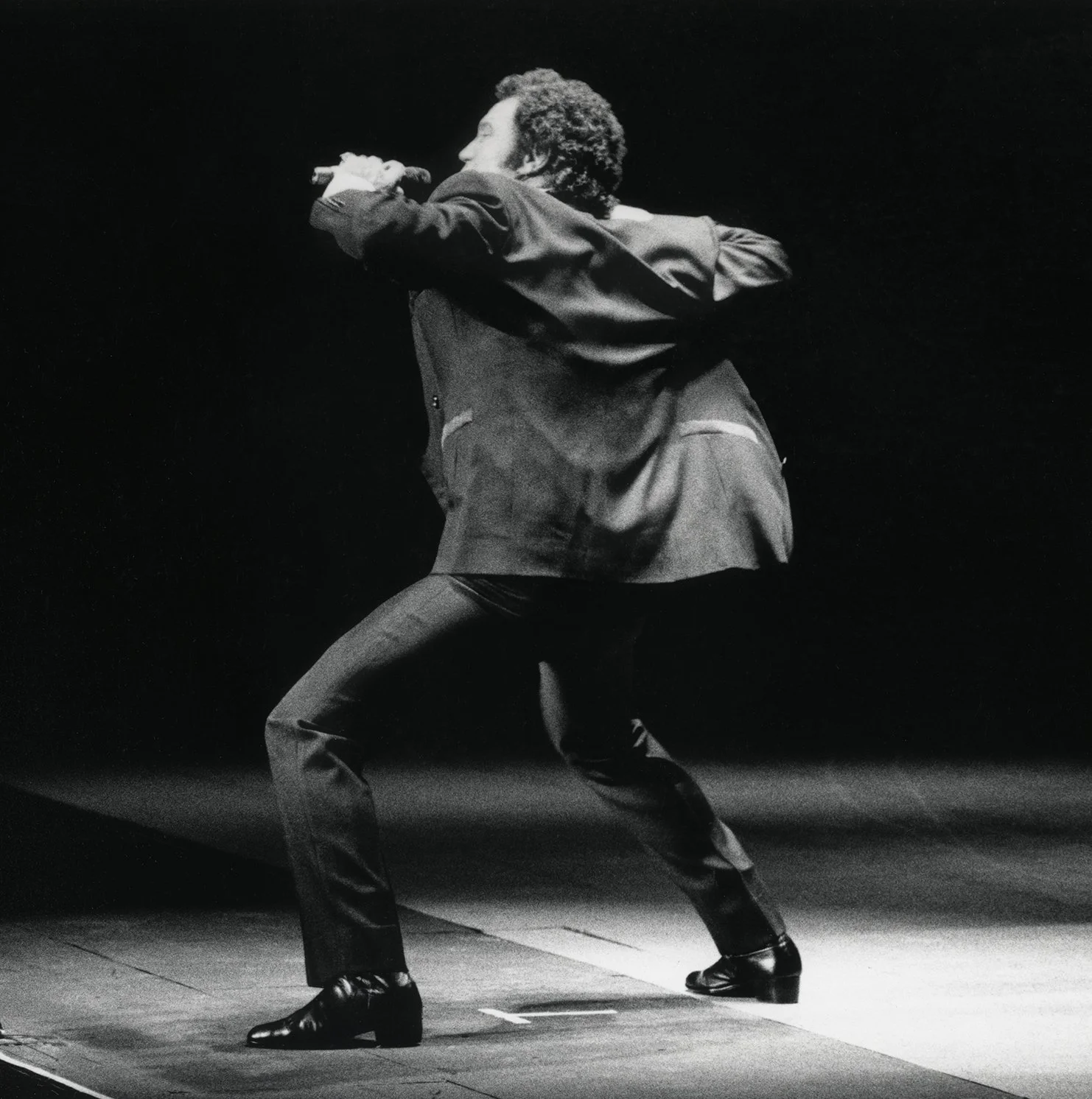
Second Image: Live at the O’Keefe Centre, Toronto, July 30, 1987. Photo by Chris Buck.
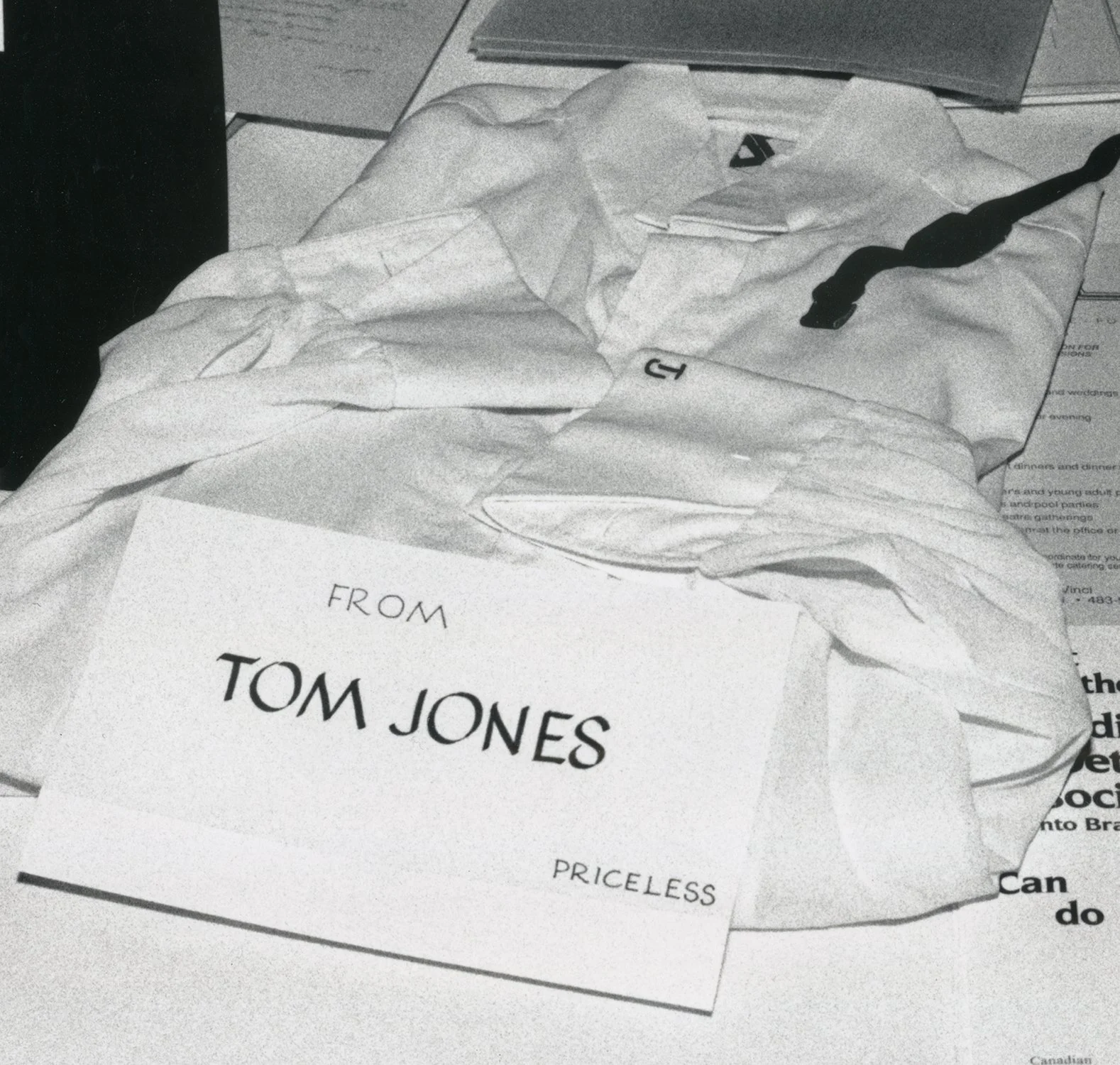
Third Image: Still life from diabetes auction, including a donation from Tom Jones. Toronto, July 1987. Photo by Chris Buck.
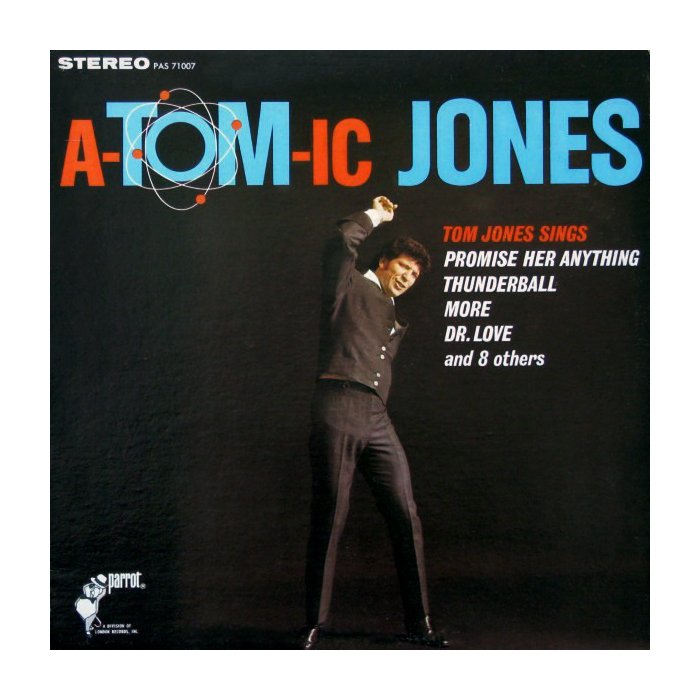
Fourth Image: a-Tom-ic Jones album cover, 1966
Bottom Image: Chris and Mike Kelly at a Tom Jones event, circa 1996.