
Hyper-Ballad
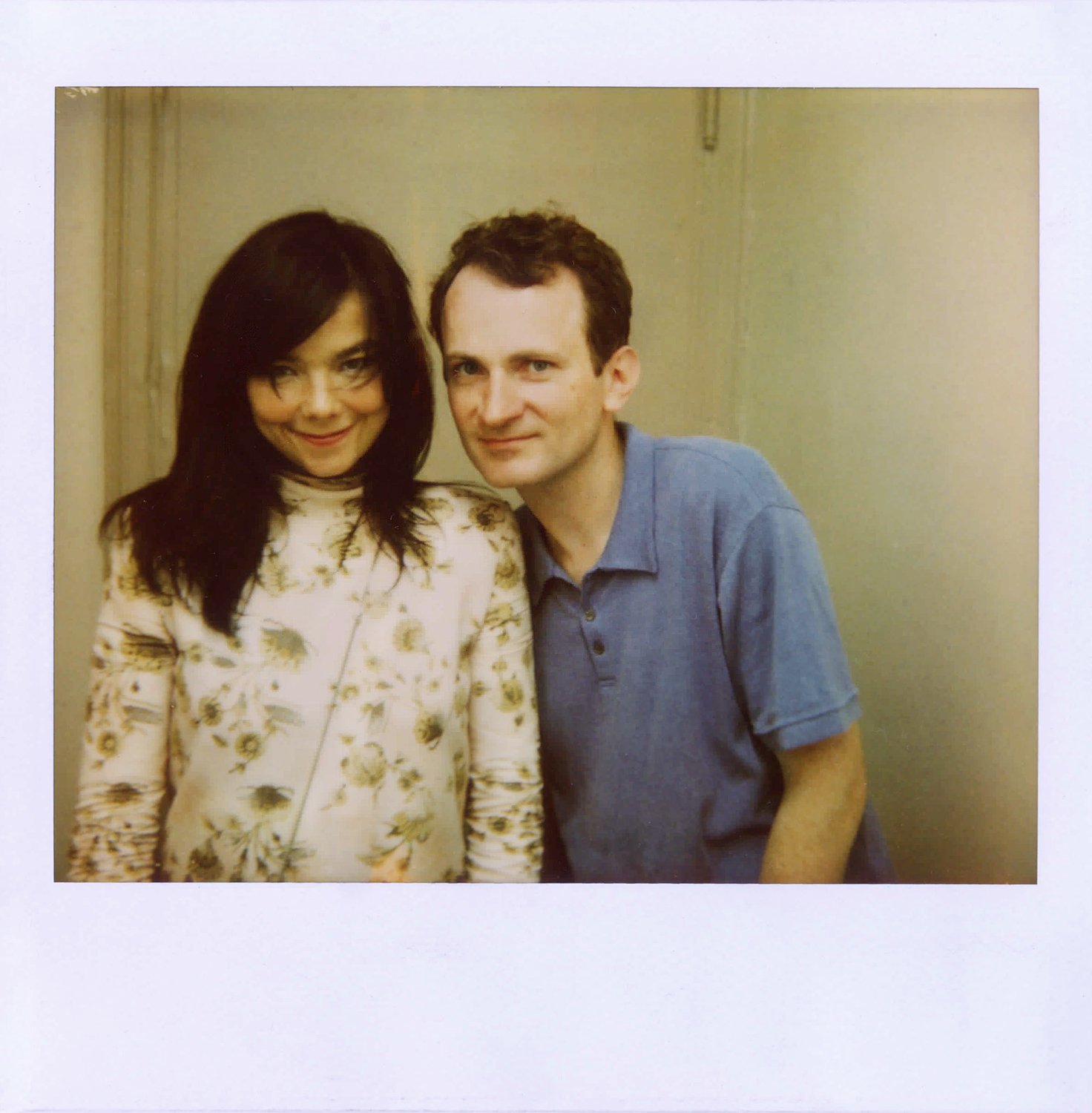
When The Sugarcubes first toured North America in 1989, I was lucky to see them at a club in Kensington Market in Toronto. Situated at the front of the audience, I got to see (and hear) Björk’s magnetic performance. The band was tight and had some fun tracks, but it was already her presence that stood out.
Over a decade later, I was able to get a sitting with the iconic artist. She was initially known for her powerhouse voice, but was now renowned for her bold choices and fresh takes, redefining what Art Rock could be.
In the session with her, I mentioned that the progression of her career reminded me of one of my favorite artists, Peter Gabriel. She looked at me with a blank expression, as if to say, “I’ll pretend that I didn’t hear that.“
Nevertheless, I was thrilled to be there, and I hoped to capture even a sliver of her magic on film. Yet, for an artist who managed to tell rich human stories while making dynamic, exciting-sounding songs, I found her difficult to connect with.
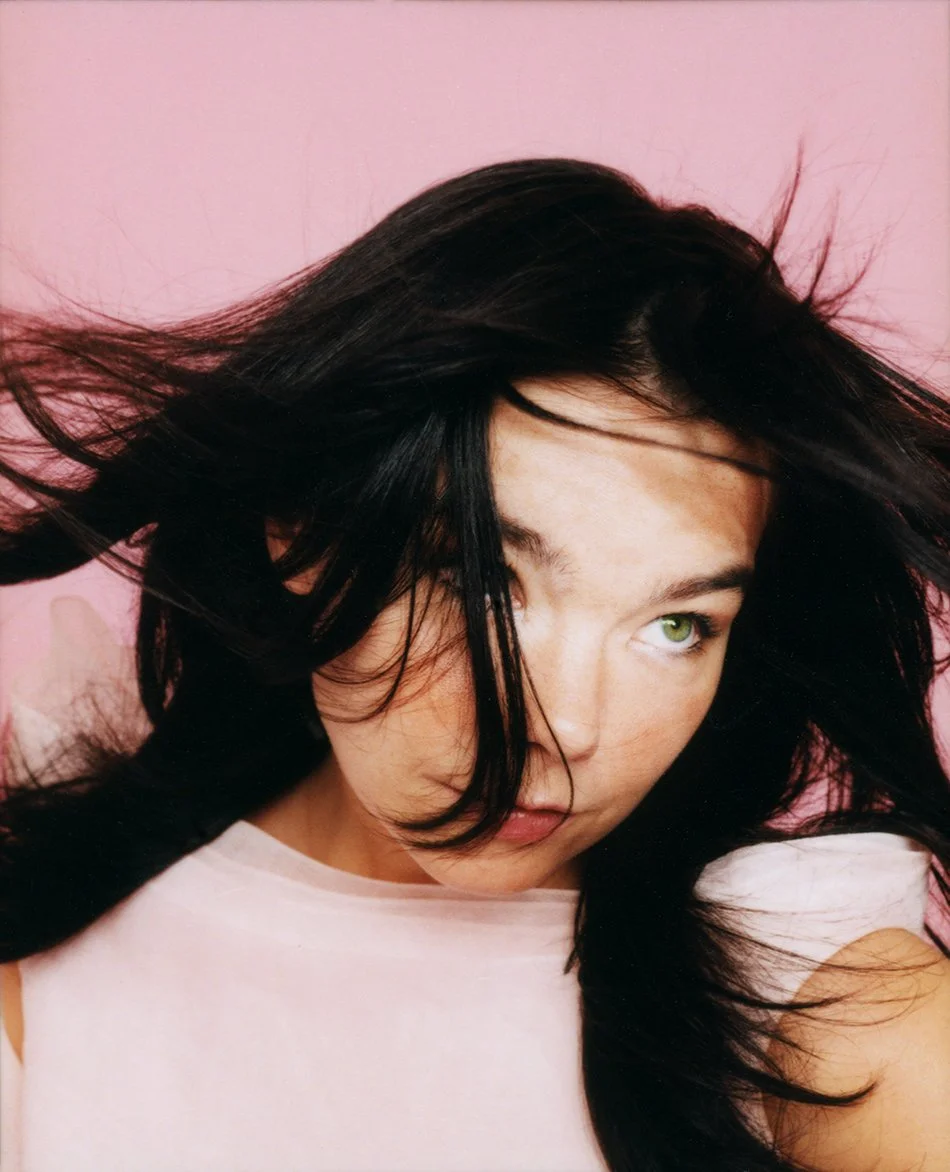
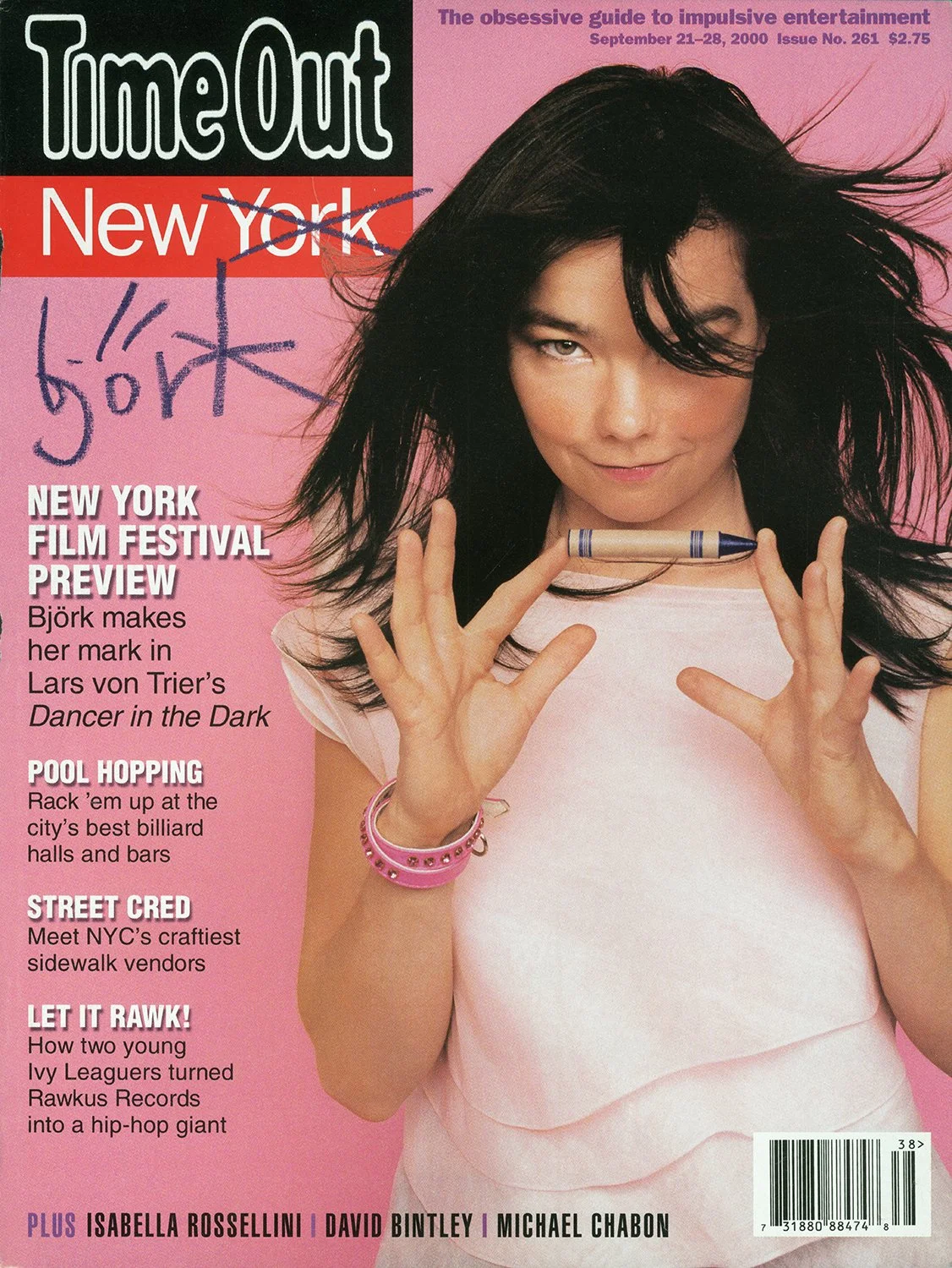
We started by shooting some conceptual shots against seamless, working towards the Time Out cover. She was promoting her starring role in celebrated Danish filmmaker Lars Von Trier’s Dancer In The Dark, and the magazine wanted the cover to be idea-driven and inviting.
Like always, I aimed to also do some shots that are more esoteric and personal, and looked to bring her along on that journey. As she was a great visual storyteller, I asked her what she'd like to do for a picture. She said that she’d recently moved to New York, and that she was an immigrant. She would like to make the photograph around that theme.
We’re in an all-white studio in midtown Manhattan, and you’re wearing an odd Japanese shirt dress, and you want to be photographed as a Lower East Side-style immigrant? Any thoughts on how we get there?
My capsule write-up of the shoot from the time:
Björk had an almost singular interest in the more superficial aspects of being photographed: the colors used, the clothing worn, etc. She explained that she tries to communicate a sense of her music in photographs (because people are more sophisticated visually than aurally) in order to prepare her audience for the music itself. Driving a portrait session with fashion-shoot trappings (she wanted the fan blowing her hair all of the time, for example) seemed to camouflage more than it conveyed about her as a person, or even as an artist.
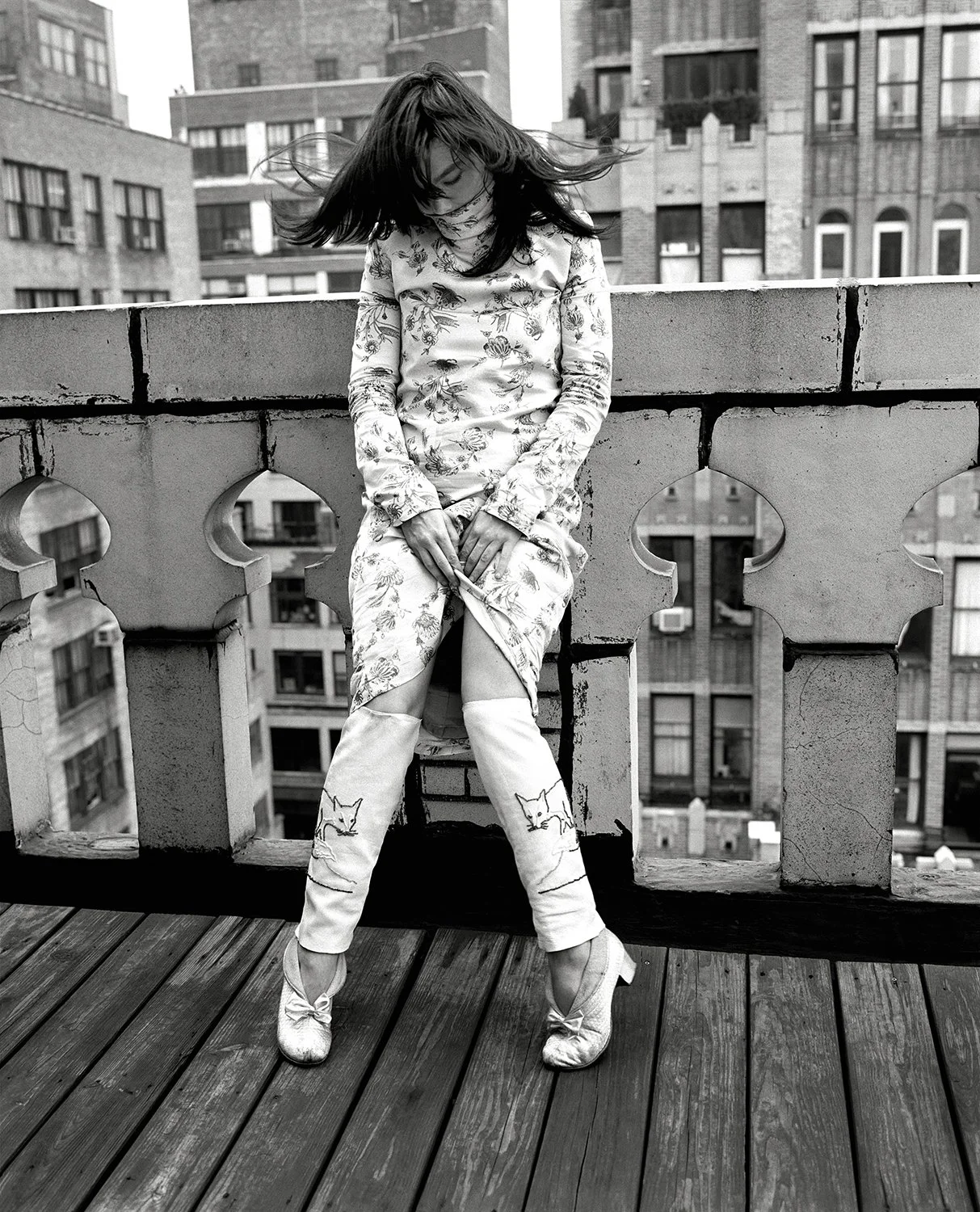
The best moments in the shoot came when she moved toward something that was sexual or vulnerable. At one point, she cupped her breasts, and at another, she pulled up her dress toward her crotch.
Indeed, the best picture came at the end of the shoot, when Björk improvized some poses on the balcony that were suggestive, but understated. And, in a visual setting that was texture upon texture, the final black-and-white image was powerful.
Over 15 years later, in the height of the #metoo moment, Björk made some statements on her Facebook page about the experience of making Dancer In The Dark. Here are some excerpts:
i became aware of that it is a universal thing that a director can touch and harass his actresses at will and the institution of film allows it . when i turned the director down repeatedly he sulked and punished me and created for his team an impressive net of illusion where i was framed as the difficult one .
after each take the director ran up to me and wrapped his arms around me for a long time in front of all crew or alone and stroked me sometimes for minutes against my wishes .
when after 2 months of this i said he had to stop the touching , he exploded and broke a chair in front of everyone on set . like someone who has always been allowed to fondle his actresses . then we all got sent home .
because of my strength , my great team and because i had nothing to lose having no ambitions in the acting world , i walked away from it and recovered in a years time .
Björk has always struck me as an unusually independent artist, but her work is also deeply collaborative. Much of her experimentation and evolution has come through her relationships with musicians, producers, filmmakers, and other artists. That openness, and the willingness to be vulnerable that comes with it, seems fundamental to her creative process. What happened with von Trier threatened not only her personally, but also that willingness to trust and collaborate.
To hear her describe being manipulated and diminished by someone else revealed a vulnerability that seemed almost at odds with the force of her public persona. It also made me reconsider the obstacles I encountered when I photographed her in 2000.
Reading Björk’s statements years later, I was struck by how much vulnerability she had brought to our shoot, at a moment when she was promoting the very film that had put her in that position. In retrospect, that openness feels more significant than I understood at the time.
Top Image: Björk, Polaroid with the photographer. New York, NY, August 28, 2000.
Second Image: An outtake from the setup towards the cover image.
Third Image: The Time Out cover, September 21-28, 2000.
Bottom Image: This portrait was the opening spread of the magazine story and was Buck’s pick for his 2017 book, Uneasy.